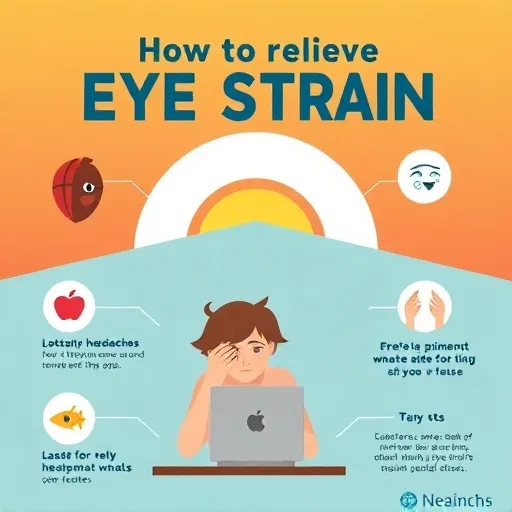
Eye strain headache
First, Let's Understand What's Actually Happening
Before you start hunting for ways on how to relieve eye strain headache discomfort, it really pays to know what's going on behind the scenes. An eye strain headache — sometimes called a digital eye strain headache or one tied to asthenopia — usually kicks in when the tiny muscles around your eyes, forehead, and temples get seriously overworked. When you stare at a screen for hours, read in dim lighting, or squint at tiny text, those little muscles stay clenched like a fist that never unclenches. That tension radiates outward, and next thing you know, your head is throbbing and you're frantically searching how to relieve eye strain headache pain at 4 p.m. on a Tuesday.
Here's what the classic signs tend to look like:
- A dull ache behind the eyes or wrapping around the temples
- Blurred or double vision after long stretches of screen time
- Dry, itchy, or watery eyes
- Extra light sensitivity that makes bright rooms feel unbearable
- Neck and shoulder tension that creeps upward into your skull
- Brain fog and trouble concentrating by late afternoon
Recognizing these signals is honestly the first real step toward relief — and it's also the foundation for understanding how to relieve eye strain headache issues before they snowball. As one industry professional put it, "Most people treat the headache and ignore the eyes — but the eyes are almost always the root cause." That quote stuck with me, because it flips the whole approach: you're not chasing the pain, you're fixing the eye fatigue that started it.
Why Screen Time and Poor Lighting Trigger Eye Strain Headache Symptoms So Easily
Think about it: your ciliary muscles are basically the autofocus system of your eyeballs, and they weren't designed to lock onto a glowing rectangle eight hours a day. Add poor ergonomics, harsh glare, and a room that's either too dark or too bright, and you've got a recipe for recurring headaches. The eye strain builds quietly, then the headache shows up like an uninvited guest. Understanding this chain matters way more than memorizing a list of tricks for how to relieve eye strain headache discomfort — because once you see the cause, the fixes make intuitive sense.
Quick Fixes: How to Relieve Eye Strain Headache Right Now
Okay, let's say your head is already pounding and your eyes feel like sandpaper. When you need fast answers on how to relieve eye strain headache pain, start with these tried-and-true moves:
- The 20-20-20 rule: Every 20 minutes, look at something 20 feet away for at least 20 seconds. It sounds too simple, but it genuinely lets those focusing muscles unwind. Set a timer or use a break reminder tool — most modern devices in 2026 even have built-in eye comfort modes that nudge you automatically.
- Palming: Rub your palms together to warm them, then cup them gently over closed eyes for 30–60 seconds. The warmth and darkness soothe tired muscles and calm light sensitivity. It's one of the oldest, cheapest methods for how to relieve eye strain headache tightness, and it costs nothing.
- Cold or warm compress: For tension headaches, a warm compress across the forehead and temples relaxes tight muscles. If your eyes feel puffy, go cool instead. Some folks alternate — 5 minutes warm, 5 minutes cool. Either way, it quiets the throbbing fast.
- Hydration: Dehydration worsens headaches and dry eyes at the same time. If you've been glued to your desk for hours, that ignored glass of water might be the cheapest remedy around. Sip consistently rather than chugging once.
Adjust Your Workspace and Screen Setup to Reduce Eye Strain Headache Triggers
If eye strain headaches keep coming back, the culprit might not be your eyes at all — it might be your desk. Your monitor should sit about an arm's length away, with the top at or slightly below eye level. Looking slightly downward means your eyes open less wide, which means less tear evaporation and less strain. Craning your neck forward? That's a one-way ticket to a tension headache.
Then there's lighting. Glare is a silent troublemaker — position your screen so it isn't facing a window or bright light directly, and match your ambient lighting to your screen brightness. A dark room plus a blinding screen forces your eyes to work overtime. A small warm-toned desk lamp can make a huge difference in the evening. And don't sleep on blue light settings: night mode, warm color filters, and auto-brightness all help reduce digital eye strain. As a senior practitioner at a well-known vision clinic recently noted, "The goal isn't to eliminate blue light — it's to reduce the contrast shock your eyes experience as day turns to night." An anti-glare screen protector or anti-reflective lens coating is also worth considering if you log 6+ hours daily in front of a display.
Daily Habits and Eye Exercises That Prevent Eye Strain Headache Flare-Ups
Relief is great, but prevention is where the real wins live — especially when it comes to how to relieve eye strain headache problems long-term. Start with blinking: studies consistently show people blink up to 60% less when staring at screens, and fewer blinks mean dry eyes, irritation, and eventually headaches. Try a deliberate "blink break" — 10 full, slow blinks every few minutes. It sounds silly until you feel the difference.
Beyond the 20-20-20 rule, take a 5-minute break every hour: stand up, stretch, and let your eyes focus on distant objects. Movement also releases neck and shoulder tension, a major contributor to tension headaches that originate near the eyes. Watch your posture too — forward head posture strains your neck muscles, which refer pain to your temples and behind your eyes. Keep shoulders relaxed, feet flat, and your monitor at eye level.
Simple eye exercises can strengthen your focusing muscles: the "pencil push-up" (bring a pen slowly toward your nose while keeping it in focus) and the "figure-eight" tracking drill both improve flexibility. A couple of minutes, a few times a day, is plenty. And don't forget the lifestyle layer — sleep, stress management, hydration, and nutrition (omega-3s, vitamins A, C, and E, plus magnesium) all shape how often eye strain headaches show up. Poor sleep means your eyes don't lubricate properly, and stress makes you unconsciously clench facial and neck muscles. Prioritize 7–9 hours of quality rest, keep screens out of the bedroom, and try deep breathing or progressive muscle relaxation — these are legitimate tools, not fluffy extras.
Finally, know when to look beyond home remedies. If headaches persist despite lifestyle tweaks, if you notice sudden vision changes or floaters, or if you're reaching for pain relief more than a couple times a week, book an eye exam. Uncorrected refractive errors, binocular vision problems, and dry eye syndrome can all trigger recurring headaches — and sometimes the simplest answer to how to relieve eye strain headache trouble is a prescription update you haven't checked yet.